|
From azure
to indigo, from blue jeans to "the blues," the color
blue tints our lives with meaning. Now the favorite color
of the Western world, blue has endured a topsy-turvy history.
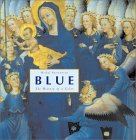
In Blue: The History of a Color (Princeton University
Press, 2001), medievalist historian Michel Pastoureau
traces the changing meanings of blue from its rare appearances
in prehistoric art to its international prominence in
popular culture. What unfolds is a passionate investigation
of how the ever-changing role of blue in society has been
reflected in manuscripts, stained glass, heraldry, clothing,
painting and many other aspects of culture.
 |
Beginning with the almost
total absence of blue from ancient Western art and language,
Pastoureau’s tale moves to medieval Europe. As people
began to associate blue with the Virgin Mary, the color
became a powerful element in church decoration and symbolism,
despite the resistance of chromophobic prelates. Blue
gained new favor as a royal color in the twelfth century
and became a formidable political and military force through
the French Revolution. As blue triumphed in the modern
era, new shades were created and blue became the color
of romance and the Romantics. Finally, Pastoureau follows
blue into contemporary times as it is viewed from a new
perspective—outer space—and has become the universal,
unifying color of Earth.
Blue is what true
scholarship is all about. It is engaging, easy to read
and elegantly illustrated with nearly one hundred color
plates. And Pastoureau presents a convincing case that
blue has been, and maybe always will be, a primary color.
*Michel
Pastoureau is a historian and Director of Studies at the
Ecole practique des hautes études, Paris, and at
the Ecole des hautes études en sciences sociales,
Paris. He is the author of several books in French, as
well as The Devil’s Cloth: A History of Stripes
and Striped Fabric. Blue, at 216 pages (with
color plates) is published in cloth and sells for $35.00.
|